საამქროს აღჭურვილობა
Workshop equipment covers the machines that serve every other machine in a joinery: dust and chip extraction, cyclone separation, downdraft sanding tables, power feeders that push stock through a saw or moulder, and a grinder for re-sharpening profile knives. None of this equipment cuts a part, yet the accuracy, dust load, safety and running cost of the whole shop depend on it. This category holds 30 machines from HOLZMANN (Austria) and NETMAK (Turkey) across five groups. Every machine is supplied by quotation, with voltage, port configuration and ducting agreed before the offer is issued.
განახლდა
ნაპოვნი დანადგარები
-
HOLZMANN
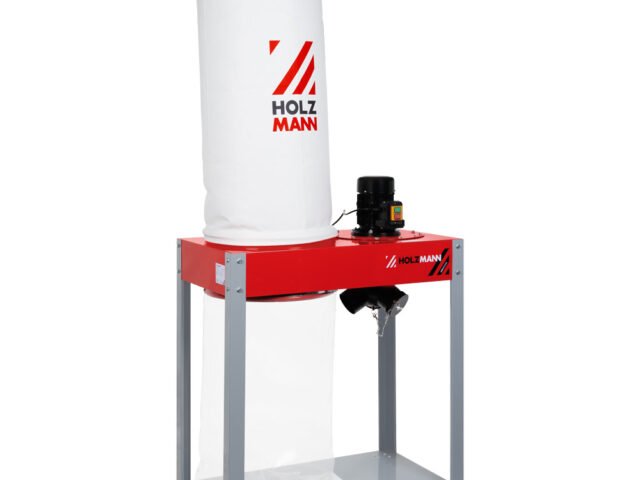
HOLZMANN ABS3000SE Dust Collector – 3000 m³/h, Three Machine Outputs
ABS3000SE- Motor power
- 1.5 kW
- Voltage
- 400V
ფასი მოთხოვნით ფასის მოთხოვნა
How to choose workshop equipment
Workshop equipment is chosen from the machines it has to serve, never from its own headline figures. Count the machine ports that will run at the same time, add up their diameters, measure how far the furthest machine sits from where the collector will stand, and only then look at airflow. A joinery that sizes extraction around one planer and adds a moulder a year later ends up buying extraction twice.
Dust extraction: static pressure decides long runs
Dust extraction in this range runs from roughly 850 m³/h on a single Ø100 mm port up to 7500 m³/h on a Ø280 mm trunk. Airflow describes what a collector moves with a short hose on it; static pressure describes whether it still moves that air through twenty metres of pipe, two bends and a blast gate. For one machine standing beside the collector, airflow is the number to compare. For a fixed duct network serving several machines, static pressure is the number, and the higher-pressure units are the ones that keep a long run alive.
Cyclone separator or bag collector
A cyclone separator earns its cost where fine dust is the real complaint. The cyclones here draw 1900 to 3200 m³/h and drop chips into wheeled bins of 110, 151 and 227 litres, so the filter stays clean far longer and emptying means rolling a bin out instead of wrestling a full bag. A bag collector costs less, needs less headroom — the cyclones stand 1840 to 2190 mm tall — and remains the sensible answer for a single machine or a low-ceilinged shop.
Downdraft sanding tables
A downdraft sanding table catches what no machine hood can: the dust released while a part is sanded by hand. Tables here come as 1050 mm and 2200 mm tops drawing 4000 and 8000 m³/h respectively, and as height-adjustable benches of 1350 x 695 mm and 1440 x 800 mm with a working height set between 760 and 1030 mm. Table length is the real decision — one operator sanding doors, or two people working long parts side by side.
Power feeders and knife grinding
A power feeder is bought for three reasons at once: hands away from the cutter, a constant feed speed, and a finish without stop marks or burns. Feeders here range from a single wheel, used so curved and shaped parts can follow a template on a spindle moulder, to three- and four-roller heads with eight speeds from 3.5 to 34 m/min. A profile knife grinder pays back in a shop that runs moulding knives regularly, regrinding profiles up to 200 mm long on cutter heads up to 300 mm in diameter instead of replacing knife sets.
როგორ ავირჩიოთ
- Extraction 850-1500 m³/h
- One machine at a time on a single Ø100 mm port — a planer, bandsaw or small saw standing next to the collector. Not enough to hold a fixed duct run.
- Extraction 2200-4000 m³/h
- Two or three machines on short branches. Compare the number and diameter of ports, and whether unused ports can be capped, not just the airflow figure.
- Static pressure above 2500 Pa
- Long or bent trunk ducting, or a wide hood such as a moulder or wide-belt sander. Airflow collapses over distance; pressure is what carries the run.
- Cyclone separator with wheeled bin
- Choose when fine dust is the complaint, filters clog quickly, or chips must be emptied by rolling a 110-227 litre bin out rather than lifting a bag.
- 230 V single-phase supply
- Limits the choice but does not end it: small collectors, the 1050 mm and 2200 mm sanding tables and one 4500 m³/h collector run single-phase.
- Ceiling height under 2.2 m
- Rules out the tall collectors and the largest cyclone. Look instead at the height-adjustable body reaching 1950 mm or the 750 mm under-machine unit.
- Sanding table 1050 mm vs 2200 mm
- 1050 mm and 4000 m³/h for one operator sanding doors and drawer fronts; 2200 mm and 8000 m³/h when two people work long parts side by side.
- Feeder wheels: one, three or four
- One wheel for curved and template work on a moulder; three rollers for general ripping and moulding; four rollers to keep long boards under drive through the whole pass.