
Wood Lathe Tools and Accessories
Wood lathe tools and accessories are what decide the cut once the lathe itself is chosen. This category holds 8 HOLZMANN items: six replaceable carbide turning tips - round radii of Ø 6, Ø 12 and Ø 16 mm, square cutters at 11.3 x 11.1 mm and 15 x 15 mm, and one 28 x 10 mm pointed diamond - together with two eccentric clamping systems, ML 70 mm on Ø 25 mm and ML 110 mm on Ø 30 mm, for fixing heavy and unbalanced turning pieces. All items are supplied at a published price.
Machines found
-
 HOLZMANN
Wood Lathe Tools and Accessories
HOLZMANN
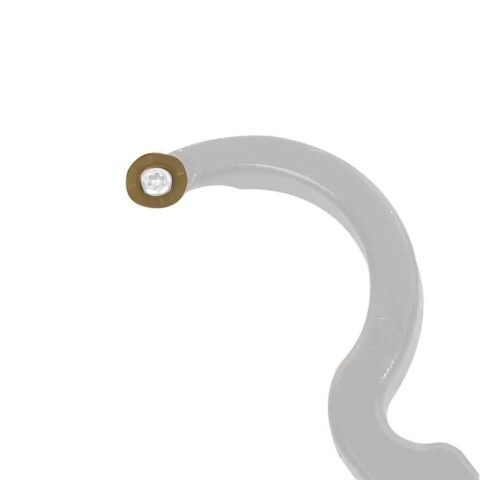
Wood Lathe Tools and AccessoriesHOLZMANN 10015506 Carbide Round Turning Tip Ø 12 mm
- Weight
- 0.02 kg
Ø 12 mm is the number that decides the HOLZMANN 10015506: it sits between the Ø 6 mm 10015511 and the Ø 16 mm 10015509 as the middle round radius in the range, and HOLZMANN lists it titanium plated. At 0.02 kg net the 10015506 is a light cutter for coves, beads and bowl walls.
Price on request -
 HOLZMANN
Wood Lathe Tools and Accessories
HOLZMANN
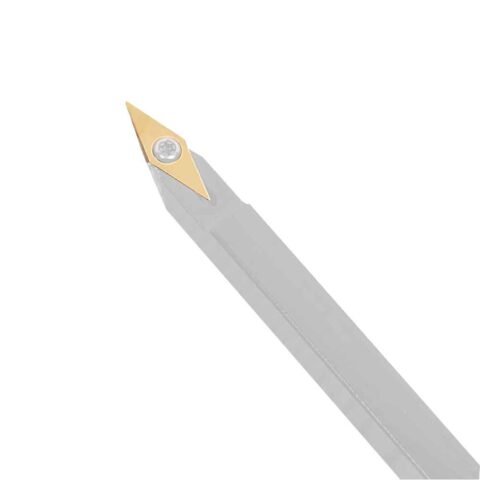
Wood Lathe Tools and AccessoriesHOLZMANN 10015507 Carbide Diamond Turning Tip 28 x 10 mm
- Weight
- 0.04 kg
Only one HOLZMANN turning tip comes to a point, and the 10015507 is it: a 28 x 10 mm diamond, longer and narrower than any round or square cutter in the range. Titanium coated and 0.04 kg net, the 10015507 is the tip picked up for V-grooves, decorative lines, undercuts and sharp corners.
Price on request -
 HOLZMANN
Wood Lathe Tools and Accessories
HOLZMANN
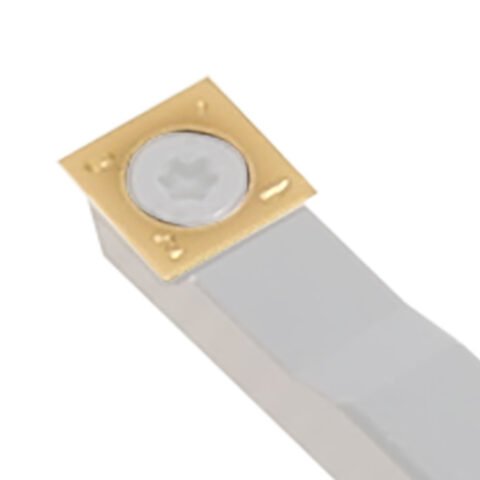
Wood Lathe Tools and AccessoriesHOLZMANN 10015508 Carbide Square Turning Tip 15 x 15 mm
- Weight
- 0.05 kg
Fifteen millimetres of straight edge per side is what separates the HOLZMANN 10015508 from the 11.3 x 11.1 mm 10015510 - about a third more edge, and 0.05 kg of titanium-coated carbide against 0.02 kg. The 10015508 is the square tip for bringing larger blanks down to a cylinder.
Price on request -
 HOLZMANN
Wood Lathe Tools and Accessories
HOLZMANN
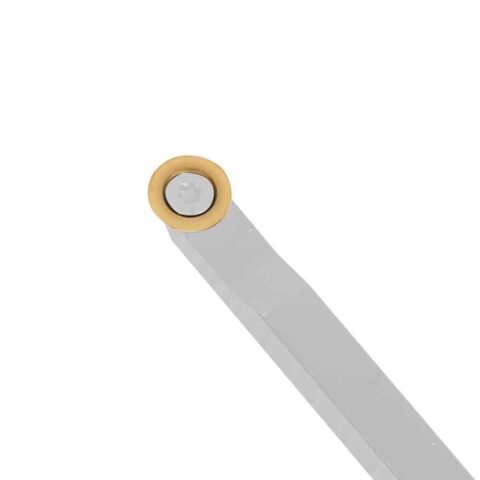
Wood Lathe Tools and AccessoriesHOLZMANN 10015509 Carbide Round Cutter Ø 16 mm, Ti-Coated
- Weight
- 0.05 kg
Ø 16 mm gives the HOLZMANN 10015509 the longest curved edge of any round tip in the range - 4 mm more diameter than the 10015506 and 0.05 kg of titanium-coated carbide against 0.02 kg. More edge in the cut is why the 10015509 is the roughing and hollowing choice on bowl blanks.
Price on request -
 HOLZMANN
Wood Lathe Tools and Accessories
HOLZMANN
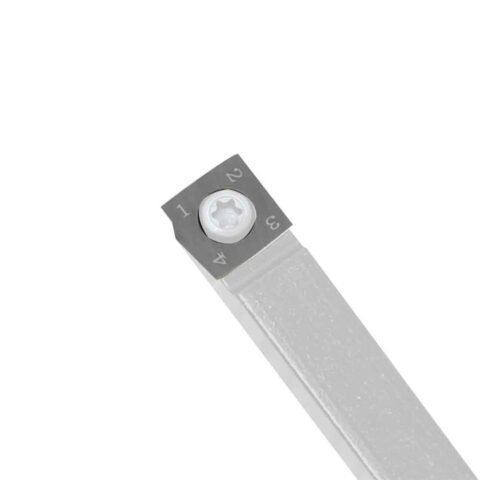
Wood Lathe Tools and AccessoriesHOLZMANN 10015510 Carbide Square Turning Tip 11.3 x 11.1 mm
- Weight
- 0.02 kg
The HOLZMANN 10015510 is the small square: 11.3 x 11.1 mm and 0.02 kg net, packed 41 x 98 x 10 mm rather than the 58 x 138 x 10 mm carton the 15 x 15 mm 10015508 travels in. Less edge in the cut means less pull, which is what suits the 10015510 to light bars, small lathes and thin spindles.
Price on request -
 HOLZMANN
Wood Lathe Tools and Accessories
HOLZMANN
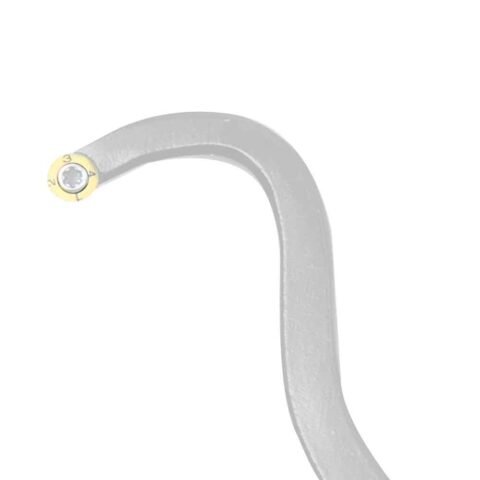
Wood Lathe Tools and AccessoriesHOLZMANN 10015511 Carbide Round Turning Tip Ø 6 mm
- Weight
- 0.03 kg
At Ø 6 mm the HOLZMANN 10015511 has the smallest cutting radius of the three HOLZMANN round tips - half the diameter of the Ø 12 mm 10015506 and well under the Ø 16 mm 10015509. That is what lets the 10015511, at 0.03 kg net, follow tight coves, narrow beads and small box interiors.
Price on request -
 HOLZMANN
Wood Lathe Tools and Accessories
HOLZMANN
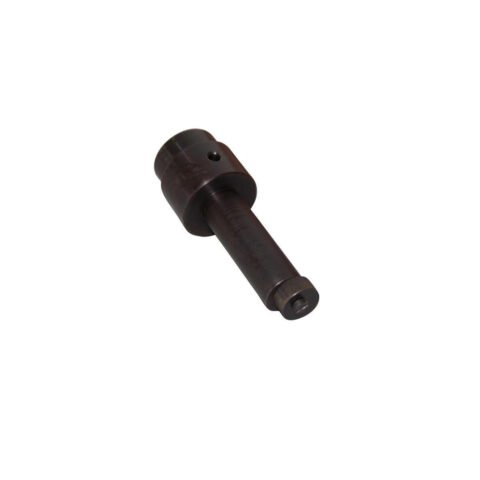
Wood Lathe Tools and AccessoriesHOLZMANN ES25070 Eccentric Clamping System (ML 70 mm, Ø 25 mm)
- Weight
- 1 kg
ML 70 mm at Ø 25 mm is the smaller of the two eccentric clamping systems HOLZMANN publishes: 40 mm shorter and 5 mm thinner than the ES30110, at 1 kg net against 1.5 kg. The HOLZMANN ES25070 is used to fix heavy and unbalanced turning pieces on a wood lathe. EAN 9120039908335.
Price on request -
 HOLZMANN
Wood Lathe Tools and Accessories
HOLZMANN
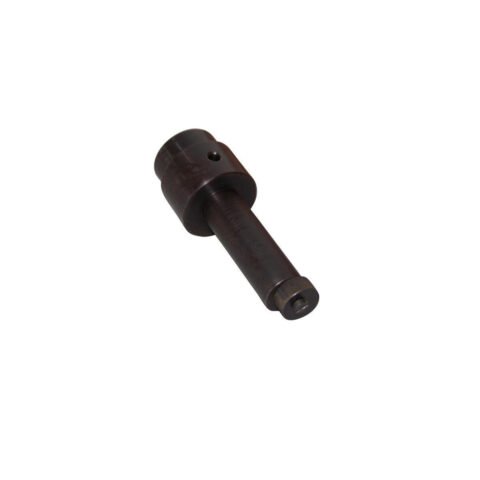
Wood Lathe Tools and AccessoriesHOLZMANN ES30110 Eccentric Clamping System (ML 110 mm, Ø 30 mm)
- Weight
- 1.50 kg
Where the ES25070 runs out, the HOLZMANN ES30110 carries on: ML 110 mm at Ø 30 mm, 1.5 kg net against 1 kg, in a 100 x 100 x 120 mm carton. HOLZMANN gives both units the same job - fixing heavy and unbalanced turning pieces - but 40 mm more length and 5 mm more section deflect less.
Price on request
How to choose carbide turning tips and lathe accessories
Choose a turning tip by the shape of the cut, then by size. Geometry decides what the tip can physically do: a round tip rolls through curves, a square tip works straight sides and flat faces, and the single pointed tip cuts lines a round or square edge cannot reach. Size changes how much edge is in the cut – more edge removes material faster but pulls harder on the bar and on the operator. This category holds 8 HOLZMANN items: six carbide tips and two eccentric clamping systems.
Round, square or pointed
Round tips are the general-purpose choice for bowls, coves and beads, in three sizes: Ø 6 mm on the 10015511 for tight coves, narrow beads and detail, Ø 12 mm on the 10015506 as the middle size, and Ø 16 mm on the 10015509 as the roughing and hollowing tip with the longest curved edge. Square tips take the straight work: 15 x 15 mm on the 10015508 gives about a third more edge per side than the 11.3 x 11.1 mm 10015510, at 0.05 kg of carbide against 0.02 kg. The 10015507 is the only pointed geometry here, a 28 x 10 mm diamond for V-grooves and decorative lines.
Size, resistance and the tool you are holding
Match tip size to the bar and to the operator, not only to the workpiece. A large tip such as the Ø 16 mm 10015509 or the 15 x 15 mm 10015508 puts more edge in the cut, which is what brings a rough blank down to shape but also what generates the most resistance; on a light bar that resistance becomes a fight. The small square 10015510 and the Ø 6 mm 10015511 pull less and stay controllable on light tools and small work. Most turners end up with one large and one small tip of each geometry rather than one compromise size.
Coating
Coating is listed on part of the range rather than all of it: HOLZMANN publishes the 10015506, 10015507, 10015508 and 10015509 as titanium plated or titanium coated. Coating matters most for edge life on abrasive and resinous timber and least on short work in clean softwood. Confirm the finish of the tip you want on the quotation rather than assuming every article carries the same coating.
Holding the work: two eccentric clamping systems
Workholding is the accessory decision here, and HOLZMANN gives both eccentric clamping systems the same job – fixing heavy and unbalanced turning pieces on a wood lathe. The difference is reach and stiffness. The ES25070 is the compact unit at ML 70 mm on Ø 25 mm and 1 kg net; the ES30110 carries on where the ES25070 runs out, at ML 110 mm on Ø 30 mm and 1.5 kg net, with 40 mm more length and 5 mm more diameter to resist deflection a shorter unit would allow.
What to budget alongside the tips
Budget the holder, the lathe and the safety kit as separate lines. Carbide tips are cutting inserts – they need a turning bar or holder to sit in, and the fixing screw is what wears first, so a spare screw and driver is worth adding. Tips are indexed and replaced rather than reground like high-speed steel gouges, so treat them as a running cost and order more than one of the geometry you use most. Face protection, and an eccentric clamping system if you turn unbalanced blanks, complete the working set.
How to choose
-
Round tip (10015511, 10015506, 10015509)
Curved work - bowls, coves, beads and hollowing. Pick Ø 6 mm for detail and reach, Ø 12 mm as the middle size, Ø 16 mm for roughing where the longest curved edge helps.
-
Square tip (10015510, 10015508)
Straight sides, shoulders and flat faces. 15 x 15 mm gives roughly a third more edge per side than 11.3 x 11.1 mm and carries 0.05 kg of carbide against 0.02 kg.
-
Pointed diamond tip (10015507)
V-grooves, decorative lines and detail a curved or straight edge cannot enter. The 28 x 10 mm 10015507 is the only pointed geometry in the range.
-
Large tip vs small tip
More edge in the cut removes material faster but pulls harder. Large sizes suit heavy bars and roughing; the small square and Ø 6 mm round stay controllable on light bars and small work.
-
Titanium coating
HOLZMANN lists the 10015506, 10015507, 10015508 and 10015509 as titanium plated or coated. Coating earns its place on abrasive and resinous timber; confirm the finish on the quotation.
-
Eccentric clamp ES25070 vs ES30110
Both fix heavy and unbalanced turning pieces. Choose ML 70 mm on Ø 25 mm for compact work, ML 110 mm on Ø 30 mm when extra length and stiffness are needed.
-
How many tips to order
Carbide tips are indexed and replaced rather than reground, so order more than one of the geometry used most and treat tips as a running cost, not a one-off purchase.