სატორსე ხერხი (ტარცოვკა)
A mitre saw brings a 305 mm blade down onto stock held against a fence, so timber, mouldings and trim are cut to an exact length and angle instead of being pushed through a saw by hand. This category holds 3 HOLZMANN machines: the belt-driven KAP305ECO, the deeper-cutting KAP305JL, and the TK305, which converts between table saw and mitre saw in a single 20.5 kg body. All 3 are supplied by quotation, configured around the cut capacity and bench arrangement of your workshop. Compare the models below and request a quote for the one that matches the sections you cut most often.
განახლდა
ნაპოვნი დანადგარები
-
HOLZMANN
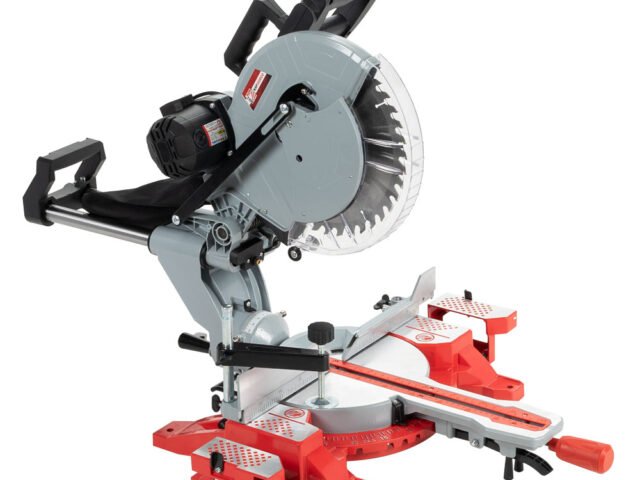
HOLZMANN KAP305ECO Sliding Mitre Saw, 305 mm
KAP305ECO- Motor power
- 2 kW
- Voltage
- 230V
ფასი მოთხოვნით ფასის მოთხოვნა -
HOLZMANN
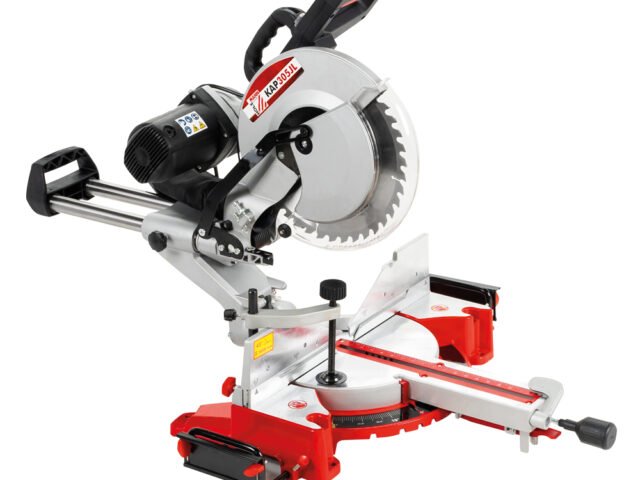
HOLZMANN KAP305JL Mitre Saw (305 mm Blade)
KAP305JL- Motor power
- 2 kW
- Voltage
- 230V
ფასი მოთხოვნით ფასის მოთხოვნა -
HOLZMANN
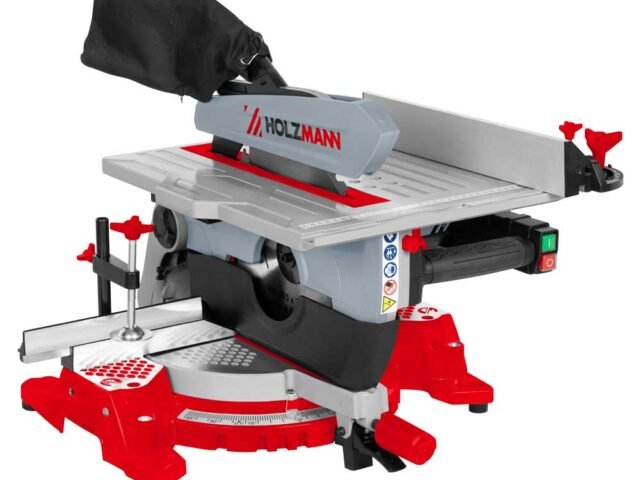
HOLZMANN TK305 Compound Table and Mitre Saw, 305 mm
TK305- Motor power
- 2 kW
- Voltage
- 230V
ფასი მოთხოვნით ფასის მოთხოვნა
How to choose a mitre saw
Choose a mitre saw by the largest section you cut every week, not by the largest section the saw can reach once. All three HOLZMANN mitre saws here turn a 305 mm blade, so what separates them is depth of cut, drive arrangement and whether the machine also has to serve as a table saw. The KAP305JL cuts 115 mm deep at 90 degrees and 85 mm at 45 degrees. The KAP305ECO cuts 105 mm deep at 90 degrees and 60 mm at 45 degrees, and crosscuts 330 mm wide. The 45-degree figure usually decides the purchase, because a mitre through a thick door stile or a stair string is exactly where a smaller saw runs out of travel.
Belt drive or a faster blade
Belt drive is the argument for the KAP305ECO: HOLZMANN drives its head at 3800 min-1 through a belt and specifies that arrangement for low noise and gentle mechanical treatment, on an 1800 W S1 / 2000 W S6 motor and a die-cast aluminium base. The KAP305JL instead turns its blade at 4200 min-1 from a 1600 W S1 / 2000 W S6 (25%) motor and adds an extendable table extension with a rear stop – what a joinery wants when 200 identical rails must come off the saw at the same length.
When one convertible machine is the right answer
The TK305 suits a shop with room for one saw rather than two. Releasing a locking lever and lifting off the lower cover turns the TK305 from a table saw into a mitre saw; in mitre mode the head swivels -45 to +45 degrees, tilts to 45 degrees and cuts 180 mm long at 90 degrees on a 2000 W motor, in a 20.5 kg body light enough to carry to a site.
Power supply
Power supply is rarely the obstacle with a mitre saw. Motors in this category are rated between 1600 W and 2000 W, which is why a mitre saw is normally the one machine in a Georgian workshop that does not force a three-phase connection, unlike a spindle moulder or a panel saw. Confirm the voltage and plug type on your quotation, and give the saw a circuit that is not already carrying an extractor.
Floor space and extraction
Floor space for a mitre saw is measured along the wall, not around the machine. The saw occupies little more than a bench, but 3 m lengths of trim need support both left and right of the blade, so plan a bench run of at least 4 m for long stock. Extraction matters as much: crosscutting throws dry chip straight back, and the KAP305JL provides a 68 mm port for a mobile extractor hose. A collection bag alone leaves fine dust in the air of the whole shop.
Tooling and cost drivers
Budget blades separately from the machine. A 305 mm blade with a high tooth count and negative hook angle produces the clean crosscut that veneered and lacquered work needs, and one general-purpose blade will not cover both softwood framing and finished hardwood; budget the bench or stand and the length stops too. Across this range the price driver is capacity and repeatability rather than power, since all three machines peak at 2000 W: the TK305 buys versatility, the KAP305ECO belt drive and a die-cast base, the KAP305JL the deepest cut and a stop system for production lengths.
როგორ ავირჩიოთ
- Cut depth at 90 degrees
- 115 mm on the KAP305JL against 105 mm on the KAP305ECO; take the KAP305JL if you crosscut posts, beams or stacked stock.
- Cut depth at 45 degrees
- 85 mm on the KAP305JL against 60 mm on the KAP305ECO - the single figure that decides mitred work in thick sections.
- Crosscut width
- The KAP305ECO crosscuts 330 mm wide, enough for a full shelf or a wide skirting board in one pass.
- Drive type
- Belt drive on the KAP305ECO at 3800 min-1 for low noise; the KAP305JL runs the blade faster at 4200 min-1.
- Repeat lengths
- Choose the KAP305JL when batches matter - it carries an extendable table extension with a rear stop.
- One machine for two jobs
- The TK305 converts between table saw and mitre saw, cutting 180 mm long at 90 degrees on 2000 W.
- Portability
- At 20.5 kg the TK305 travels between shop and site; the KAP models are better left set up on a fixed bench.
- Extraction connection
- A 68 mm port on the KAP305JL takes a mobile extractor hose - plan extraction before installation, not after.