ფუგანი (სალაშინი)
A surface planer, also called a jointer or by its Georgian trade name fugani, creates the first flat face and the square edge that every later operation is measured from. This category holds 4 floor-standing machines from HOLZMANN and NETMAK in 400, 410, 500 and 600 mm jointing widths, on 2000 mm and 2600 mm tables, weighing from 290 kg to 880 kg. Cutterheads are either a 44-insert spiral or a 120 mm four-knife block. Every surface planer on this page is supplied by quotation.
განახლდა
ნაპოვნი დანადგარები
-
HOLZMANN
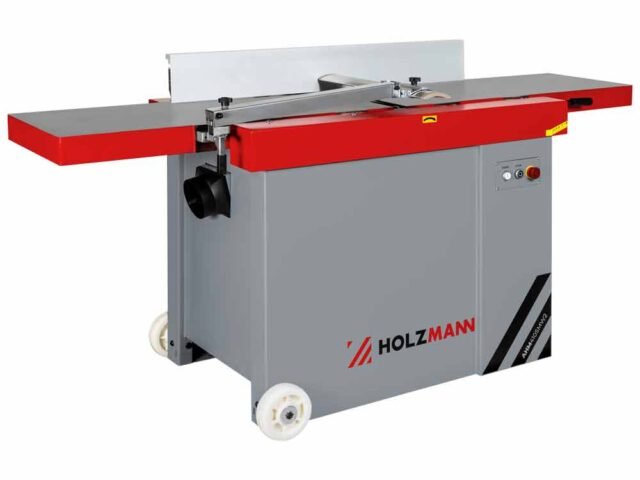
HOLZMANN AHM410SMW2 Surface Planer with 44-Insert Spiral Cutterhead
AHM410SMW2- Working width
- 410 mm
- Motor power
- 3 kW
- Table length
- 2000 mm
- Voltage
- 230V
ფასი მოთხოვნით ფასის მოთხოვნა -
NETMAK
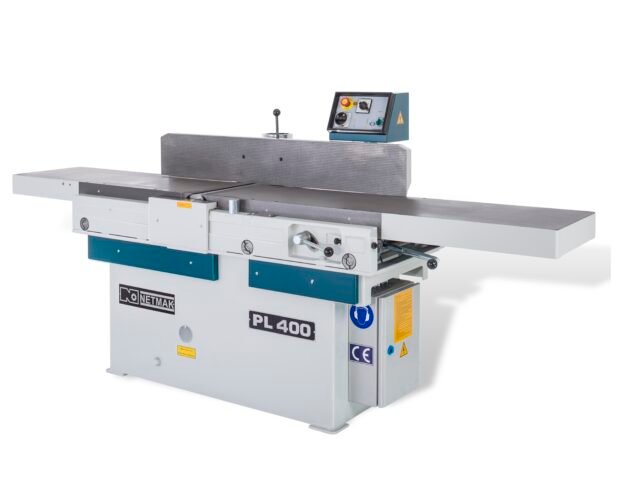
NETMAK PL 400 Surface Planer (400 mm)
PL 400 Planya Makinasi- Motor power
- 5.5 kW
- Table length
- 1420 mm
ფასი მოთხოვნით ფასის მოთხოვნა -
NETMAK
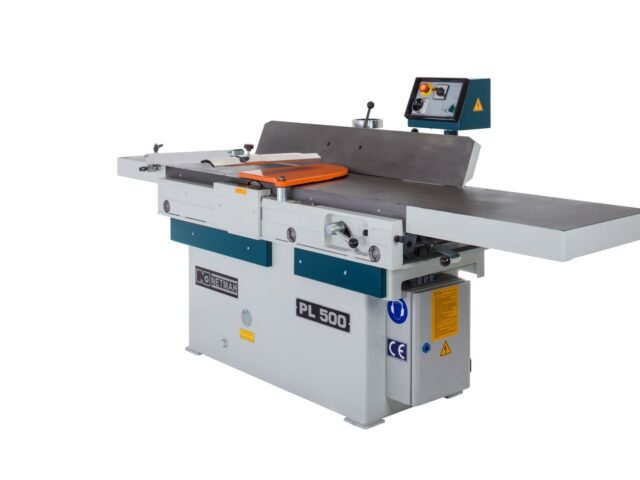
NETMAK PL 500 Surface Planer (500 mm)
PL 500 Planya Makinasi- Motor power
- 5.5 kW
- Table length
- 1420 mm
ფასი მოთხოვნით ფასის მოთხოვნა -
NETMAK
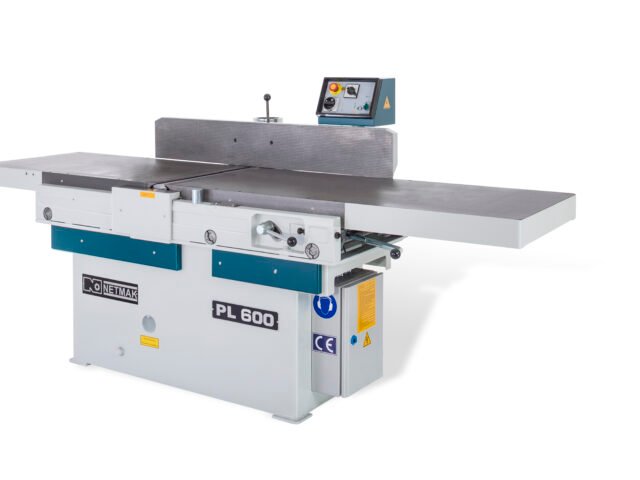
NETMAK PL 600 Surface Planer (600 mm)
PL 600 Planya Makinasi- Motor power
- 5.5 kW
- Table length
- 1420 mm
ფასი მოთხოვნით ფასის მოთხოვნა
Why a workshop buys a separate surface planer
A surface planer exists to create the first flat face and the square edge that every later cut is measured from. Rip a board on a saw before it has a flat face and the saw follows the twist; thickness it before it has a flat face and the thicknesser simply makes the bow parallel. Workshops buy a standalone surface planer rather than a combined machine for one reason: nobody has to convert the machine between operations, so a planer and a thicknesser can run at the same time with two people on them.
Choosing the jointing width
Jointing width is the specification that decides which of these four machines you buy, because a surface planer cannot flatten anything wider than its tables. The HOLZMANN AHM410SMW2 gives 410 mm, and the NETMAK PL 400, PL 500 and PL 600 give 400, 500 and 600 mm respectively. Set the width from the widest glued panel or door stile you actually face – 400 mm covers most furniture and door components, while 600 mm on the PL 600 is for wide glued panels and heavy joinery. Table length matters alongside width: the AHM410SMW2 has 2000 mm of table and all three NETMAK PL machines have 2600 mm, and longer tables are what let you straighten a long board instead of following its curve.
Spiral insert head or a four-knife block
Cutterhead type is the real difference between the HOLZMANN and NETMAK machines here. The AHM410SMW2 runs a Ø 70 mm spiral cutterhead with 44 indexable carbide inserts of 15 x 15 x 2.5 mm at 30 degrees, turning at 5500 min-1: the inserts shear the grain, so figured and interlocked hardwood comes off with far less tear-out, and a dull insert is turned to a fresh edge instead of a whole knife set being reground. The NETMAK PL 400, PL 500 and PL 600 all run a 120 mm four-knife block at 4500 rpm, which is the traditional arrangement – cheaper per cutterhead, fast on softwood, and needing knives to be set and reground as a set.
Power supply, floor space and extraction
All four of these machines are floor-standing industrial equipment, so the electrical supply has to be settled before delivery. The AHM410SMW2 runs a 3000 W S6 motor and the NETMAK PL 400, PL 500 and PL 600 each run 5.5 kW, loads that need a proper industrial supply rather than a workshop socket. Weight decides the floor: the AHM410SMW2 is 290 kg, while the PL 400 is 710 kg, the PL 500 770 kg and the PL 600 880 kg, and 2600 mm of table needs clear space at both ends equal to your longest board. Extraction is mandatory, not optional – a surface planer throws shavings continuously, and the extractor should be sized for the machine port and quoted with the machine.
Tooling and what drives the quotation
Tooling is a recurring cost that belongs in the comparison. A four-knife machine such as the PL 500 consumes knife sets and needs a setting gauge and a grinding arrangement; the spiral AHM410SMW2 consumes individual carbide inserts and the key to index them. Add extraction ducting, roller supports for long stock, and the electrical connection. The quotation itself is driven by jointing width, table length, cutterhead type, machine weight and frame construction, the tooling package, delivery to your site and installation, so ask for those priced as separate lines.
როგორ ავირჩიოთ
- Jointing width 400-410 mm
- NETMAK PL 400 and HOLZMANN AHM410SMW2. Covers most furniture components, door stiles and general joinery stock, and is the sensible starting width for a full-time workshop.
- Jointing width 500-600 mm
- NETMAK PL 500 at 500 mm and PL 600 at 600 mm. Specify this only if you face glued panels, wide door stiles or heavy joinery sections - it is width you pay for in weight and floor area as well as price.
- Table length 2000 mm versus 2600 mm
- The AHM410SMW2 has 2000 mm of table; the PL 400, PL 500 and PL 600 all have 2600 mm. Longer tables straighten long boards instead of following their curve, so match table length to the longest stock you face regularly.
- Spiral insert head
- Only the AHM410SMW2 has one: a Ø 70 mm head with 44 indexable carbide inserts at 5500 min-1. Choose it if beech, oak or figured timber is routine and tear-out currently means hand sanding.
- Four-knife cutterblock
- The PL 400, PL 500 and PL 600 all use a 120 mm four-knife block at 4500 rpm. Lower cutterhead cost and fast on softwood, at the price of setting and regrinding knives as a set.
- Machine weight 290 kg versus 710-880 kg
- The 290 kg AHM410SMW2 can go on a normal workshop floor. The PL 400 at 710 kg, PL 500 at 770 kg and PL 600 at 880 kg need a solid floor, a pallet truck or forklift to position, and a permanent location.
- Motor rating 3 kW S6 versus 5.5 kW
- The AHM410SMW2 runs a 3000 W S6 motor; each NETMAK PL machine runs 5.5 kW. Both are industrial loads - confirm the supply variant and connection on the quotation before the machine ships.
- Extraction capacity available
- A surface planer produces shavings continuously and none of these machines has integrated extraction. Size the extractor to the machine port and quote it, plus ducting, at the same time as the planer.